Articles and guides
Sluban STEAM: what children discover while building
Author: Sluban HračkyPublished: Updated:
The interesting part happens between a pile of bricks and a finished model. Children search for parts, compare shapes, test connections and correct mistakes. Sluban STEAM draws attention to that process, as well as the result.
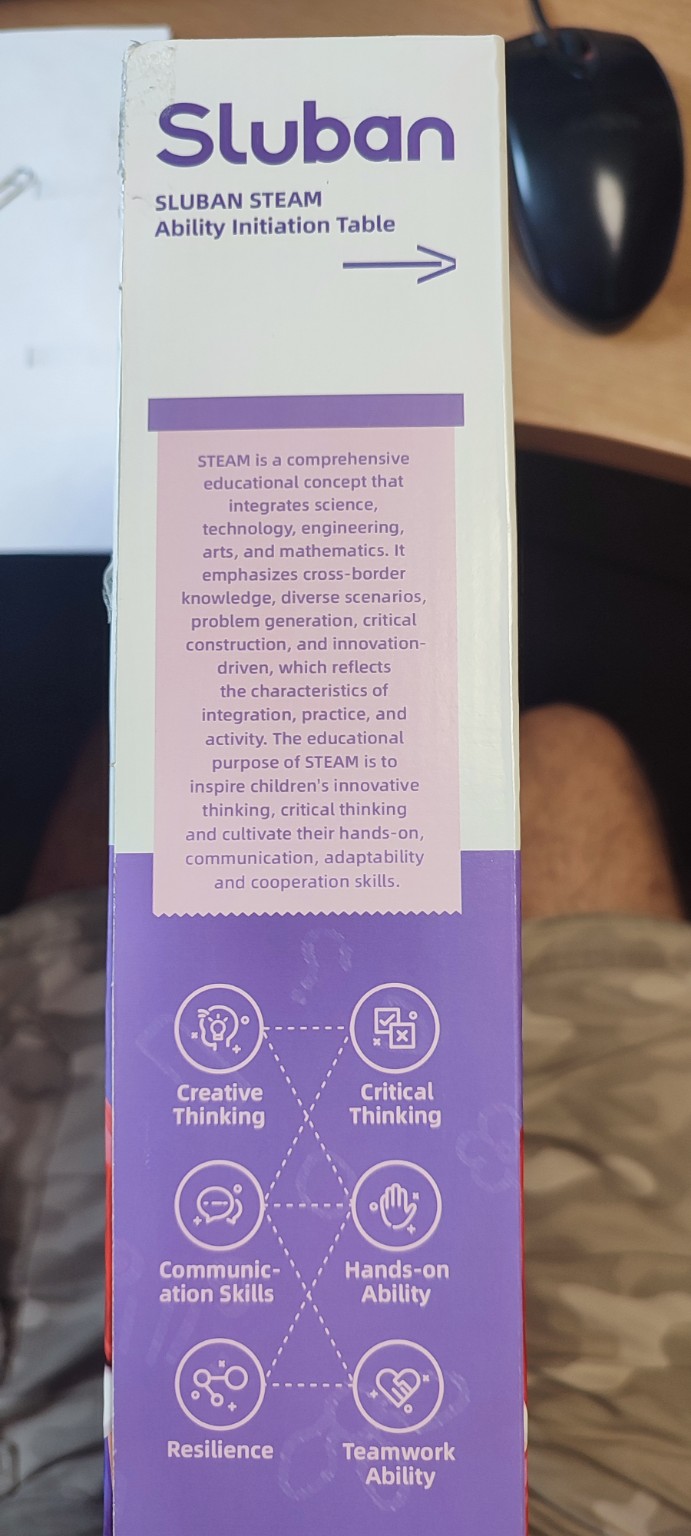
STEAM connects science, technology, engineering, arts and mathematics. Sluban also highlights six skills that building activities can involve. Opportunities for creativity, problem solving and teamwork depend on the actual activity; outcomes are not guaranteed.
What STEAM means
STEAM brings together Science, Technology, Engineering, Arts and Mathematics. It connects different ways of thinking while working on a practical task. For a building set, that task might be making a stable house, a moving vehicle or a bridge between two bases.
Children do not need to know the abbreviation to explore these ideas. They observe, plan, work with their hands and test whether an idea succeeds. An appropriate challenge, room for questions and time to try again matter more than turning every building session into a formal lesson.
Six skills highlighted on Sluban packaging
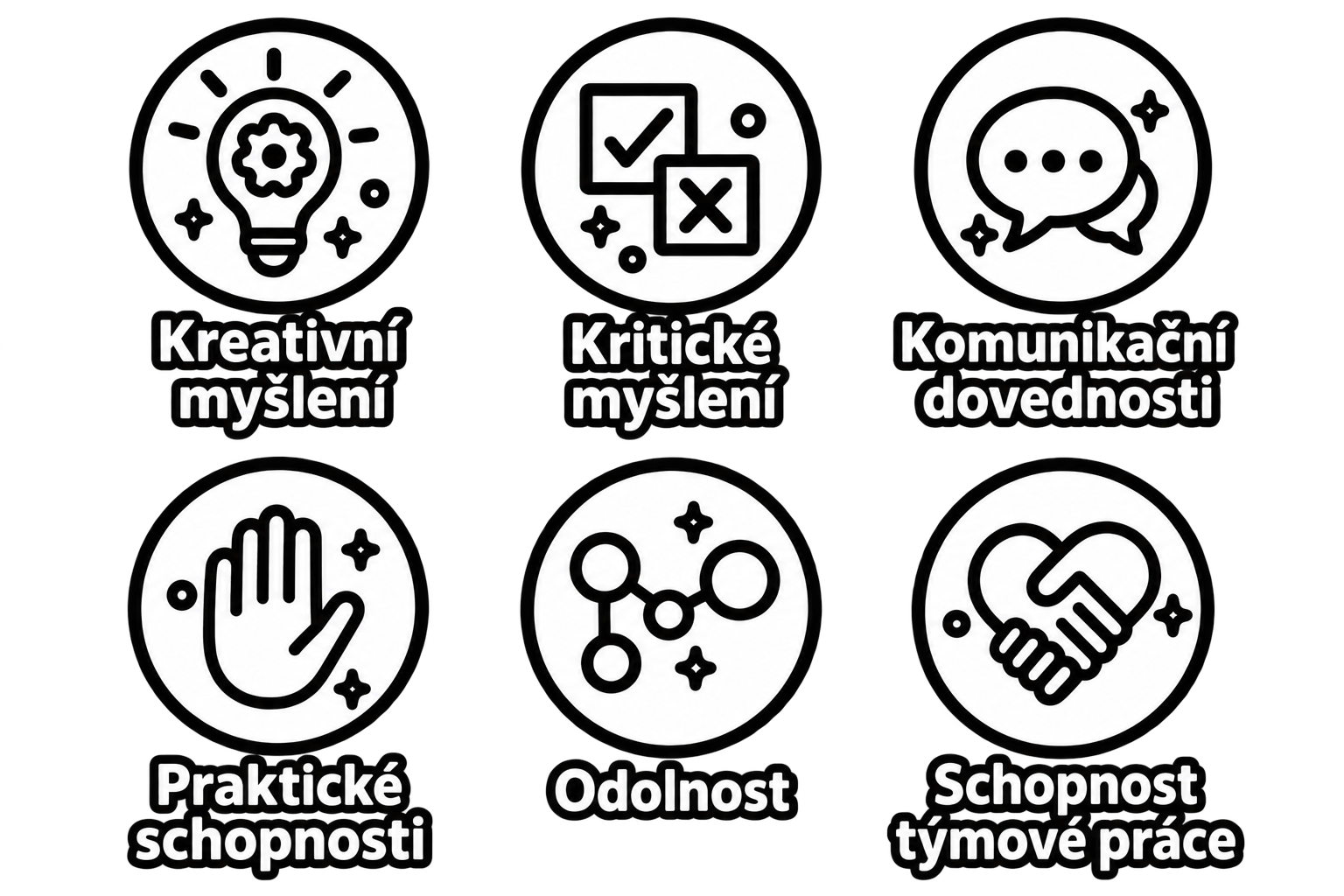
Sluban presents creative thinking, critical thinking, communication, hands-on ability, resilience and teamwork alongside STEAM. These are not six separate lessons: several can be involved in the same step of a build.
The experience depends on the child, the chosen set and how it is used. Packaging icons can begin a conversation about play, but the useful question is what this particular builder is exploring and enjoying.
Creative thinking: instructions and original ideas
Instructions introduce parts and ways to connect them. A builder can then add a floor, change a vehicle or join two scenes into a street. Familiar construction methods become material for a new idea.
Following a plan and being creative can support each other. Instead of supplying an answer, an adult might ask how a garage could fit one more car. Comparing possible solutions gives the child a reason to experiment with shape, space and appearance.
Critical thinking: when the next piece will not fit
A brick placed two studs out of position may only cause trouble several steps later. Finding the cause involves comparing the model with the picture, tracing previous steps and choosing what to change.
An adult can help by asking what differs or where the last matching step was. Taking over immediately removes the opportunity to investigate. A manageable mistake offers something concrete to observe, explain and put right.
Communication and teamwork
Finding the longer blue piece, describing where it goes and agreeing who builds the car or garage are real communication tasks. Building together involves listening, naming shapes and checking that an explanation is understood.
A larger model can support shared roles: sorting pieces, building separate sections and swapping jobs. Each person needs a meaningful contribution. This also applies when a child builds with a parent or grandparent; the pace should make sense for both.
Hands-on ability and resilience
Picking up a part, turning it, aligning it and joining it connects observation with planning and movement. The builder handles spatial orientation and precise connections rather than only looking at a finished object.
Resilience can appear when a section needs rebuilding. Short stages, breaks and visible progress may help a child continue after a setback. Finishing a large model in one sitting is less useful than choosing a challenge the builder can understand and return to willingly.
Science and technology: what happens if…
Why does a tall tower lean? Does a wider base help? Changing one part and comparing the result provides a simple opportunity to explore cause and effect. The aim is to notice and discuss a difference, without calling every game a laboratory experiment.
Technology need not involve a screen. A vehicle can show connections between wheels, bodywork and a mechanism. A freely moving part, a pull-back drive and electric remote control are different features; check the description for the specific product code.
Engineering, arts and mathematics
Engineering appears when a flat instruction image becomes a three-dimensional object. The builder follows a sequence, aligns components and checks stability. Arts brings choices about colour, appearance, setting and the story around a scene.
Mathematics appears in counting studs, comparing lengths, noticing symmetry and working with proportions. Equal walls or evenly spaced windows give these ideas a practical purpose. Ask a child to explain an estimate, then test it together on the model.
Metropolis and Girls Dream: a setting for stories
Metropolis introduces a city environment where buildings and transport connect. The electric vehicle showroom M38-B1262 and service vehicle M38-B1260B can prompt questions about access, services and what belongs next to a building.
Girls Dream connects construction with homes, travel and imaginative scenes. The camper van M38-B0960 can become the starting point for a journey after it is assembled. Choose a theme by the builder’s interests, and check figures and accessories against the contents of the individual box.
Builder, Power Bricks, Army and ModelBricks
Builder includes loose bricks for original designs. Power Bricks offers technically focused models: the off-road vehicle M38-B1160, for example, uses a pull-back mechanism. This is a feature of that set, rather than an automatic feature of every model in the range.
Army models allow interested older builders to compare shapes, construction and historical subjects. ModelBricks extends into a modelling hobby. Titanic M38-B0835 at 1:700 and M38-B1122 at 1:350 show why finished dimensions and display space matter alongside piece count.
Figures, rebuilding and play after assembly
Where figures are included, their movable parts help connect a completed model with a new scene. A driver can enter a vehicle or a rescue team can prepare a mission. Check the individual set rather than assuming every box contains figures.
Instructions do not have to define every future use. Models can be expanded, rebuilt or taken apart for new designs. When mixing bricks with another common system, check the size and shape of particular parts; specialised mechanisms and accessories may differ.
Making a building session work
Start with an appealing subject and the age recommendation for the individual model. Piece count indicates the size of a project, but does not measure difficulty by itself. Part size, construction methods and previous experience also matter. For a longer project, prepare somewhere to keep the unfinished model between sessions.
Afterwards, ask what was difficult, what changed and what the child would try next. The value lies in the whole process: observing, planning, correcting, cooperating and seeing separate pieces become something that the builder has made.
Product ranges
- Sluban Metropolis – city buildings, vehicles and connected play
- Sluban Girls Dream houses, animals and stories
- Sluban Builder models and creative bricks
- Sluban Power Bricks moving vehicle models
- Sluban Army military building sets
- Sluban ModelBricks detailed model building sets
- Sluban Titanic ship building models
Examples from this selection
Frequently asked questions
What does STEAM stand for?
Science, Technology, Engineering, Arts and Mathematics: connected approaches to a practical activity.
Which six skills does Sluban highlight?
Creative and critical thinking, communication, hands-on ability, resilience and teamwork.
Does a building set replace teaching?
No. It can provide opportunities to count, handle spatial relationships, communicate and solve problems. The STEAM label does not guarantee a particular educational outcome.
Must children always follow the instructions?
Instructions offer a structured challenge. Later, the model can be changed, expanded or taken apart to support an original design.
Can Sluban be combined with other bricks?
The basic dimensional system can work with many common bricks. Check the size and shape of particular parts and specialised mechanisms.
Is Sluban only for young children?
No. The catalogue includes play sets as well as larger technical and display models. Use the age recommendation and specifications for the individual product code.